Monday, 23 September 2013

66. Former clergyman hanged ' in the Pett... in a Transport of Rage and Fury..'

On Tuesday the 31st of March 1691, following the Assizes at York, Mr. Edmund Robinson, condemned for high treason the previous week, was executed. A married man with a son, he was one of eleven convicted criminals hung that day. Two were executed for murder, two for burglary, three for horse-stealing and one for burning down a barn.

Edmund Robinson, born in Colne Parish in the County of Lancaster, Nicholas Battersby of the City of York, and Robert Cokeson from the Parish of Wakefield in the County of York, were executed for the high treason of counterfeiting the King’s coin. All three denied their guilt.

The day before their execution the Reverend George Halley MA preached a sermon at York Castle before the condemned prisoners. The sermon was published in London later the same year together with an appendix giving Halley’s account of the life and trial of Edmund Robinson, himself a former clergyman. After schooling and some university studies, Robinson had been ordained both Deacon and Priest and spent about eleven years in a curacy at Holmforth, part of the Parish of Kirk-Burton in Yorkshire. He also preached for a year at Haworth in the Parish of Bradford, a place later to become the home of the Bronte family. Edmund Robinson, however, was not an exemplary curate. He forged licences, conducted clandestine marriage celebrations and, according to Halley, was actively ‘impairing and Counterfeiting the King’s Coyn’ when living in the Parish of Kirk-Burton.

At school it seems Robinson had struck up a friendship with a young man called Greggson whose father had a reputation as a ‘Coyner’ and who was himself later executed at Lancaster for coining. Whatever the origins of his criminal predilections, Robinson was able to explain to Halley all the tricks of his ‘Black Art’, ‘what difference there was, as to advantage, in Clipping and Coyning, and how the one was easier, and less troublesome than the other; that he melted down his Clippings, and what sav’d of them in Coyning, he transmitted to the Gold-Smiths, of whom he received very frequently very considerable Sums of Money... Alas! What won’t men do when blinded by interest; when Mammon is their God?’

Suspension and excommunication by the church does not seem to have put a brake on Robinson’s career as a coiner and counterfeiter. At the York Assizes of 4th March 1678, he was acquitted on a charge of coin-clipping but convicted ‘for uttering false Money’ and fined twenty pounds. The following year, at the York Assizes of 17th March 1679, he was ‘again Convicted of Uttering False Money’ and this time fined five hundred pounds. At the York Assizes of 1st August 1685, he was again tried for coining and acquitted. ‘But’, observed Halley, ‘though the Pitcher goes oft to the water, it comes home broken at last’; at York in 1691, Robinson was ‘Try’d for his old Treason in Coyning, found guilty, and deservedly Executed for the same.’

Robinson denied his guilt throughout his trial and used all the legal challenges and extra-legal manoeuvres available to defend himself. ‘Never Man produc’d more Witnesses to invalidate a single Testimony’, observed Halley: ‘some of them did very wonderfully agree together,... their words were the very selfsame, there was not one tittle Difference or Variation, by which and some Cross questions it plainly appear’d that they had conn’d their Lesson Together.’ Mistakenly thinking he would be able to buy himself a reprieve, Robinson, much to Halley’s dismay, remained defiant to the last, neither confessing his crime nor repenting his sins:

            But alas! after he had taken a solemn Leave of his Son... and given him a Charge to be dutiful to his Mother, and the like, when he ascended the Ladder, instead of performing the Religious Duty I press’d him to, instead of imploring the Mercy and Forgiveness of God for his great and manifold Transgressions of the Laws, both Humane and Divine, and particularly for the Scandalous Life he had led, when being taken under the highest obligations to the contrary, as having taken Holy Orders upon him, instead of expressing an Universal Love and a Catholick Charity, he did nothing but bitterly inveigh against the Law, the Judge, the Jury, the Witness, and against the Clerk of the Assize, for producing the records of his former Trials against him. Thus he died in the Pett, thus he expir’d rather in a Transport of Rage and Fury, than with a Christian Temper and Disposition.


Source
Halley, George, 1691. A Sermon Preach’d at the CASTLE of YORK, to the condemned prisoners on Monday the 30th of March, 1691, being the day before their execution. With an Appendix: A Short Account of Mr. Edmund Robinson, who was Condemn’d for High Treason, in Counterfeiting the King’s Coin, on Monday the 23 of March 1691 and Executed on Tuesday the 31st of March, 1691. London.

Friday, 20 September 2013

65. How's your brand image? Econolingua and Market Metaphors.


In a period when we are so conscious of the potential commercialisation of everything from sport, games and education to the genetic code and concepts of the self [what's your brand image?], it is instructive to look back at earlier times and examine the spread of market metaphors into everyday life.

Ben Jonson, in the induction to Bartholomew Fair (1614) [see blog 63], presents his play ‘as merely another commodity in a mercantile world.’ The idea of words, plays, people as commodities for barter or exchange in the marketplace brought the language of commerce to centre stage in the new Elizabethan and Jacobean playhouses. Sandra Fischer’s Econolingua: a glossary of coins and economic language in Renaissance Drama (1985) illustrated in detail the pervasiveness of economic and commercial terminology in the plays of the period and demonstrated the extent to which economic and commercial transactions were beginning to define social relationships, individual motivations and cultural institutions:
Economy begins to penetrate all human relations: money becomes the only way of assessing value, profit the only impetus for human action. Comedy shows characters defined by economic status: usurers, misers, prodigals, younger brothers, heirs, merchants, shopkeepers, tradesmen, scriveners, new men, charitable gentlemen, impecunious rogues; widows, wives, virgins, marriageable daughters and sisters, prostitutes. Plots often treat the growing connection between money and love; courtship and marriage become economic games, legal contracts, exchange transactions. The transference of wealth begins to represent love, the possession of wealth to define social value and status, and human relations to offer themselves primarily as means to profit through exploitation of exchange value rather than appreciation of intrinsic worth. Sex and wooing become commercial transactions, often instigated in a market or shop setting. In some plays women are actually auctioned off to the highest bidder.
By the end of the sixteenth century a range of economic language and terminology was in use in London providing a rich vein for playwrights to mine when drawing character and plot. Econolingua was embedded in popular culture and was by no means the language of the specialist few or of the merchant estate alone. Playwrights’ allusions, colloquialisms, double-entendres, puns, metaphors and stereotypical characterisations all suggest a common familiarity of audiences and authors with the everyday practicalities of a money economy, with the general language of commercial transactions and with the market roles related to specific occupations. Plays are full of references to the documents of the commercial world - to accounts, assurances,  bills, bonds, indents, indentures, inventories, quittances (documents certifying the full repayment of debts), reckonings, sureties, tallies, tenders; of references to financial processes and outcomes - audits, barter, brokage, credit, fees, forfeits, interest, investment, monopolies, profits, tolls, usury; of references to the physical locations associated with business and trade - the counting-house, the Exchange, the market or mart, the mint; and of references to the dramatis personae of the business community - agents, auditors,  bankrouts (bankrupts), bondmen, brokers, bursemen (merchants and money-men), cashiers, chapmen (buyers and sellers, hagglers over prices), creditors, market men, notaries, scriveners*, usurers. 

[*A scrivener was a scribe or an amanuensis, but scriveners were particularly associated with the writing of contracts and bonds and often acted as notaries and investment brokers.]

It is arguable that the English Renaissance dramatists, in their incorporation of economic ideas and expressions in their plays, are reflecting social changes of the period, particularly those changes that are consequent upon the development and extension of the market economy(1). It is Fischer’s view that by the middle years of the sixteenth century, the medieval economy, ‘a branch of religious morality based on Biblical texts and classical teaching and indoctrinated into the public through standard sermons, morality plays, and econo-religious tracts warning of the spiritual consequences of the abuse and misuse of money', is being progressively displaced by the expansion of a money economy and the demands of a growing international trade. This process of displacement, argues Fischer, is reflected in English Renaissance plays where a range of ‘recurring metaphor clusters’ (for example, marriage as an economic contract, women as merchandise, the economics of sex, human worth as exchange value) illuminate ‘the transition from medieval economy to mercantilist ethics’. Indeed Fischer claims that the ‘metaphors do not appear haphazardly; instead, they indicate first a resistance to the exchange ethic, then a grappling with its operation, and finally an acceptance of its metamorphised system of economy as the dominant force in society.’

This notion of a logical progression of dramatic metaphors paralleling social and economic changes in the period covered by the plays themselves is hard to sustain. The transition from a set of  values and attitudes rooted in feudalism to an acceptance of the ethical premises and ideology of a market economy and market society(2), if it happened at all in this linear fashion, which I very much doubt, happened over many generations. It was certainly not encompassed by the timespan of English Renaissance drama. The economic artefacts and commercial devices, the retailing and wholesaling practices, the banking and legal structures that support trade, the coinage and bills of exchange, the merchants and moneylenders, while they may give rise to a rich vocabulary for Renaissance dramatists to draw upon, have their origins in the medieval world. The practical realities of the marketplace and its transactional mode were undoubtedly well understood by Elizabethan and Jacobean audiences. That those audiences accepted ‘mercantilist ethics’ as the organising principle for society generally is, however, not easily demonstrated.

Jean-Christophe Agnew, however, goes further than Fischer in theorising the relationship between the language and content of Elizabethan and Jacobean plays and changes in economy, society and culture. In Worlds Apart: The Market and the Theatre in Anglo-American Thought, 1550-1750 (1986), he argues that the theatre is instrumental in forming new attitudes towards individuality, personality, motivation and personal relationships, attitudes that are congruent with a newly emerging market economy and market culture. It is, in Agnew’s view, the theatrical representation of the impact of commercial and money values on issues of individual identity and motivation, and on personal relationships, that partially shapes new definitions of these matters in the broader community: ‘The early modern stage did more than reflect relations occurring elsewhere; it modelled and in important respects materialized these relations.... Elizabethan and Jacobean theatre....did not just hold the mirror up to nature; it brought forth “another nature” - a new world of “artificial persons” - the features of which audiences were just beginning to make out in the similarly new and enigmatic exchange relations then developing outside the theatre.’ For Agnew the critical period for understanding the growing impact of market exchange on definitions of individuality and personal identity is the two hundred year period from 1550 to 1750. The years from 1550 to 1650 - “the long sixteenth century” - are those ‘in which the disruptive and transformative powers of market exchange were first brought home to Britons,’ and the years from 1650 to 1750 are those ‘in which Britons and Americans alike began to fashion a culture of the market.'(3)

But the purchase of commodities and of character, the acquisitive instincts associated with, and promoted by, the excitements of the marketplace, and the reflection of these phenomena in cultural products like novels, is not simply a feature of “the long eighteenth century”. Even if, as has been argued, a fully fledged consumer society had emerged in England by 1800, we can nevertheless look both back and forward in time to similar connections between the commercial and the cultural. In his Drama and the Market in the Age of Shakespeare (1992), Douglas Bruster, for example, explores the relationship between the economic and social conditions of the period, the nature of theatres as commercial enterprises and the content of the plays performed in those theatres. He argues that, although the market was not a new phenomenon, Shakespearian London was a city at the hub of an energetic market expansion and developing financial sophistication and complexity. With its growing commercialism, expanding population and, following the agricultural depression of the 1590s, increased rural migration, unemployment and vagrancy, London was at the centre of an emergent ‘market society’. He links these macroeconomic conditions to the structure of the theatre industry and to textual analysis of particular dramas.


Bruster points out that both capitalism and the theatre were institutionalised in London during this period. The Royal Exchange (“Gresham’s Exchange”) was constructed in 1566-67 with a range of new shops establishing themselves in the surrounding piazzas. It provided national and international finance and foreign currency exchange, and distributed new coinage. The New Exchange, ‘a kind of stock exchange and estate agency’, was built in 1609. The Red Lion opened for plays in 1567, and the first purpose-built public playhouses, The Theatre and The Curtain, were built in 1576 and 1577 respectively. The Rose, the first theatre to be built on the south side of the River Thames, opened in 1587, The Swan in 1595 and The Globe in 1599. Playhouse construction continued into the new century. The playhouses were set up as entirely commercial enterprises although they did occasionally perform subsidised productions. Critics and playwrights of the period recognised this entrenchment of theatres and plays within a context of business and market transactions. Stephen Gosson, who was a playwright and later a critic of the theatre, called theatres ‘the very markets of bawdry’. The playwright Thomas Dekker drew a direct parallel between the theatre and the Royal Exchange: ‘The theatre is your poets’ Royal Exchange, upon which their Muses - that are now turned to merchants - meeting, barter away that light commodity of words for a lighter ware than words - plaudits.
_________________________________________________________
(1).  Market Economy: “a money economy in which open market exchange is the dominant form of economic transaction, in which there is regulation to facilitate open market competition, and in which buyers and sellers, producers and consumers need have no personal or social ties other than those necessary for the completion of their market transactions.”

(2). Market Society: “a society in which the social structure, the most powerful institutions and organisations, the highest political offices, the key leadership positions, the most prestigious social roles, and the pre-eminent forms of social control, primarily reflect or serve market-determined status.”

(3). Market Culture: “a cultural system in which market symbols, market language and market ideology dominate the material, intellectual and spiritual life of the community.”
_________________________________________________________
Sources:
         Agnew, Jean-Christophe, 1986. Worlds Apart: The Market and the Theatre in Anglo-American Thought, 1550-1750, Cambridge, Cambridge University Press.
         Bruster, Douglas, 1992. Drama and the Market in the Age of Shakespeare, Cambridge, Cambridge University Press.
         Fischer, Sandra K., 1985. Econolingua: A Glossary of Coins and Economic Language in Renaissance Drama, Newark, University of Delaware Press.
_______________________________________________________________________________________
Related Blogs:
 9.  The Adventures of a Banknote, 18 November 2011.
11. "In the Name of God and of Profit", 26 November 2011.
63.  Mistress Commodity and the Shop of Satan, 24 August 2013.
_________________________________________________________

Wednesday, 11 September 2013

64. The Hanging Clown: A Story for 9/11

from Fellini's La Strada 1954
How you made us laugh. You were such a clown. Everyone said so. You were like that as a child. I can’t think where it came from, certainly not your mother or I. You were a natural. Always up to mischief. As if you could see the world through a hidden eye that stood everything on its head and gave it a shake to see what dropped out. You were a friendly bat hanging from the ceiling in the corner of the cave watching the world upside down and swooping down periodically to give us a scare and jolt us from everyday complacency.

You had this ability to keep us off balance. Right from your baby days, you rejected the routines of daily life. Your potty training antics were a nightmare. You thought it a huge game. A kind of hide and seek war-game in which you would find some outlandish unexpected place to make your mark. Having completed your business there, you would rush around the house announcing your exploit in delight, turn somersaults across the living-room carpet, and then sit chuckling to yourself as the whole grumbling yelling household set out, tempers fraying, on a frantic search to track down your latest escapade, searching the staircase from the attic to the cellar, through cupboards and drawers, underneath tables and chairs, in shoes and pots and pans and waste paper baskets. You had us all in a state of panic and fear but a panic and fear mixed with hilarity and laughter at the whole charade. And then one day, for your pièce de résistance, you finally went in your potty. By that time it was the last place we bothered to look and we spent a whole morning in trepidation at what we might inadvertently stumble on. Now, we thought, seeing that you had delivered your gift in the appropriate place, you were ready to buckle down to the discipline of growing up.

How wrong we were. You never did grow up. Not in the conventional sense. That was part of your charm. You were a happy child wholly entertained by your own imagination and you grew into a happy clown. In your innocent way you pricked everyone’s pretensions. But without bitterness or irony. You popped your eyes wide open, pulled disbelieving faces, went tongue-in-cheek at everyone, everything, yet never from malice. I don’t think there was a malicious bone in your body or thought in your head. To you the whole world was one enormous playground laid out for your entertainment.

Of course we despaired of you. What parent wouldn’t? How would you ever cope we wondered with the serious business of life, establish a career, make commitments, look after money, a partner, a family? It never occurred to us that clowning was your career, that there was a whole wide world of clowns for you to play with, that there was money in clowning - not that money was something you took the least bit seriously. We never dreamed you would find a lovely clownette waif to journey with you, or that you and the saucer-eyed Gelsomina would produce, irony of ironies, two of the most serious little children on the planet, children who seemed to feel they had to grow up in a hurry so that they could care for their clown-child parents.


We let you loose on the world, watched in astonishment as you thrived, and were proud as only parents can be proud. In our eyes you became a clown for all seasons and all ages, your origins in antiquity. You were the sage-fool of classical times, the rustic naïf unsophisticated commonsense philosopher. You were the ritual Amerindian clown violating conventions and taboos, simultaneously silly and wise, simple and crazy, sage and oracle. You were the tarot’s alpha and omega fool, anarchic and venturesome in your quest to understand and expose the idiocies of the times. You were the mock Pope at the medieval feast of fools, licensed to criticise and deflate authority, permitted disrespect. You were the artless Shakespearean jester deflating affectation, confronting unvarnished realities with a clear eye and ready wit, wiser than your betters, penetrating to the truth beneath wordy spin-doctored facades. You were a son of a world beyond our world. And you were our son too, our family safety valve, standing between us and our hostilities, releasing and neutralising our tension, anger and aggression, defusing our conflicts and violent outbursts.

I suppose it had to end in tears and a terrible sadness. Isn’t that the destiny and legacy of clowns? You could not have foreseen what would happen. None of us could. Perhaps you overstepped some invisible mark in the clown cosmos, some point at which the God of All the Clowns decided you should be brought to account, that you were having too much fun, that the joke was finally over and your laughter should be turned to our tears. Were you ever conscious, I wonder, of how charmed your life had been? Of the miracle it had lasted so long?

Does every generation have its childish laughter stifled by some watershed event that wipes out the innocence and optimism of youth? For your great grandfathers it was the trenches of the Somme and Passchendaele and the ravines and gulleys of Gallipoli. For your grandfathers the annihilation wrought at Hiroshima and Nagasaki and the horrors of the opening of the Nazi death camps. For your mother and my generation Vietnam and the My Lai massacre. For yours the world of innocence came crashing down with the Twin Towers. I am glad you did not survive to understand the significance of that September morning.

We need you more than ever now. Your wisdom, your drollery. You promised hope in a cruel, barbarous world, a dram of merriment for these weary times when there are so many causes for tears. There are no sage clowns in the courts of our new emperors. The wise fools are dead and only idiot clowns hold sway in the world, harsh strident Cassandras screaming abuse, and dolorous pierrot miming a wordless silent despair. The last vestiges of the child in me died with your death and my laughter now, such as it is, is driven by fear and a sick foreboding.
Sadly, we never had any part of you to bury, but Gelsomina gave us a little toy clown you had bought her in the Grand Bazaar at Istanbul shortly after the two of you met. The clown has a small crimson hat perched on his frizzy hair, and a large pink bow-tie above his pristine white shirt with the mother of pearl buttons. He wears a sequined jacket in a kaleidoscope of colours over turquoise pantaloons, yellow and white hooped socks and large yellow boots. We have made him the centrepiece of a tribute to you. He hangs upside down in the hallway above a triptych of family photographs and a copper plaque engraved with the words ‘In memory of Jonathan Mehmet, June 23 1959 – September 11 2001’ and a quote from Balzac: ‘As children only do we laugh, and as we travel onward laughter sinks down and dies out. To laugh you must be innocent and pure of heart.’ It reminds us as we go in and out on our daily business of the privilege and burden of laughter, and of how you made us laugh so.


Saturday, 24 August 2013

63. Mistress Commodity and the Shop of Satan


August 24th, St Bartholomew's Day

Almost nothing is known about Bartholomew, one of the twelve apostles. However, his nameday is remembered in the context of two events: the 1572 assassination of the leaders of the protestant Huguenots in Paris that led to the massacre by Catholics of tens of thousands of Huguenots across France; and one of the great English Fairs, the St Bartholomew's Day Fair.

The priory of St Bartholomew, West Smithfield, was one of the most important of the City of London's monasteries. Its monastic church and hospital were established in 1123 and its annual fair, first held in 1133, was an important source of revenue for the priory.

The Fair was held annually every August 24th, Saint Bartholomew’s Day, at Smithfield, just outside the London city walls. Most of the great fairs of medieval Europe operated under patronage, either of the sovereign power or municipal authority of the region, or of the church, and many were held on the sites of regular weekly markets. Bartholomew Fair was run under a charter held by the prior of St. Bartholomew and, in spite of the dissolution of the priory in 1538, survived until 1855.


In 1604 the Fair was taken under the control of the City of London and subsequently opened each year by the Lord Mayor. 'By that time,' wrote Richard Cavendish in History Today [55(9) 2005],

'the fair had become far more of a carnival than a business function. Puppet-shows, wrestlers, fire-eaters, dwarfs, dancing bears, performing monkeys and caged tigers vied for attention with contortionists and tight-rope walkers. Astrologers cast horoscopes and miraculous medicines were hawked. Proprietors of food and drink, beer and tobacco, bellowed for custom amid a miasma of roast pork. There were plentiful supplies of toys, gingerbread and mousetraps, puppies, purses and singing birds in a general bedlam of shouts, fiddles, drums and rattles. The fair was one of the year’s great opportunities for pickpockets, naturally, and also for prostitutes, who might be found in tents coyly labelled ‘soiled doves’ or in a nearby street appropriately named Cock Lane.'

It is this fair of the early Stuart period that the dramatist Ben Jonson drew from in his 1614 comedy. 


In the agreement presented by a Scrivener in “The Induction” to Bartholomew Fair, Jonson promises the audience a new play ‘merry, and as full of noise as of sport: made to delight all, and to offend none’. For their part the audience are to agree: to ‘remain in the places their money or friends have put them in, with patience, for the space of two hours and an half, and somewhat more’; to keep their censure of the play proportionate to their entry price - ‘if he only paid sixpence at the door then he is only entitled to six pen’orth of censure’; and to make up their own minds as to the merit of the work, uncontaminated by those around them or by preconceived expectations.

The noise and sport of Bartholomew Fair are provided by a cast of locals and visitors. There are hawkers, hucksters and pedlars, stall-holders and booth-owners - a seller of gingerbread, a seller of toys (hobby-horses, rattles, drums, toy soldiers, dolls), a costermonger selling pears, a tinderbox-man selling mousetraps and flea remedies, and sellers of ale, ballads and roast pig. And there is the cutpurse or pickpocket - ‘Just as Lent is to the Fishmonger’, wrote a pamphleteer in 1641, ‘so is Bartholomew Faire to the Pickpocket.’ Into the fair’s atmosphere of joshing and banter, bargaining and fraud, theft and frivolity, Jonson introduces two characters, each of whom represents a potential source of constraint on the unbridled freedoms of the fair, on unfettered market exchange.
 

The first of these characters, Adam Overdo, is representative of the secular regulation of the fair.  As a Justice of the Peace, Adam Overdo has responsibility for presiding over the Piepowder Court that adjudicates on disputes between dealers and between dealers and customers at the Fair. Distrusting the information he has access to in disputes, the overenthusiastic Overdo takes on a variety of disguises as he seeks out the ‘enormities’ of the Fair - traders’ tricks for short-changing and cheating their customers. These disguises are designed to let him go ‘into every alehouse, and down into every cellar; measure the length of puddings, take the gauge of black pots and cans, aye, and custards, with a stick; and their circumference, with a thread; weigh the loaves of bread on his middle-finger; then would he send for’em, home; give the puddings to the poor, the bread to the hungry, the custards to his children; break the pots and burn the pans, himself; he would not trust his corrupt officers; he would do’t himself.’ In practice the disguises merely produce ridicule and embarrassment for the gullible and luckless Overdo.

Alongside the legal busybody, Jonson presents Overdo’s moral equivalent, the puritan Zeal-of-the Land Busy. Visiting from out of town with a number of fellow puritans, Busy disdainfully presents the fair to his companions as a showplace of corruption and moral degeneracy: ‘the place is Smithfield, or the field of smiths, the grove of hobby-horses and trinkets, the wares are the wares of devils. And the whole fair is the shop of Satan!’ As the play progresses, the hypocrisy of the pompous Busy is revealed and he too becomes the butt of ridicule and derision.

Clearly, misgivings about the values of the unregulated free market, and cynicism regarding the efficacy of secular or spiritual control of that ‘Mistress Commodity’, self-interest, have a long standing history. 

Monday, 5 August 2013

62. 10,000 page views and Jack Blandiver is still kicking his heels, plus top twenty blogs updated to 15th March 2014


Jack Blandiver (see blog 5)
Today (5th August 3013) I hit 10,000 page views for my blog. My largest number of readers have been in the U.S.A. with over 3000 page views, followed by NZ (over 2000) and the UK (over 1000); also page views from seventy-three* other countries:  Argentina, Australia, Azerbaijan, Bangladesh, Belarus, Belgium, Brazil, Bulgaria, Canada, Chile, China, Columbia, Croatia, Czech Republic, Dominican Republic, Ecuador, Estonia, Ethiopia, France, French Polynesia, Germany, Gibraltar, Greece, Hong Kong, Hungary, Iceland, India, Indonesia, Ireland, Israel, Italy, Japan, Jersey, Kuwait, Latvia, Lithuania, Macau, Macedonia, Malaysia, Mexico, Morocco, Nepal, Netherlands, Nicaragua, Norway, Papua and New Guinea, Paraguay, Pakistan, Peru, Philippines, Poland, Portugal, Qatar, Romania, Russia, Saudi Arabia, Singapore, Slovakia, South Africa, South Korea, Spain, Sri Lanka, Sweden, Switzerland, Taiwan, Tanzania, Thailand, Tunisia, Turkey, Ukraine, United Arab Emirates, Venezuela and Vietnam.

[Update, 18th March 2014 - now over 17,000 page views; *as at 19th April 2014]

Here are my top twenty blogs in page view order updated at 18th March 2014.

1.  Rupert Brooke and Taatamata (blog 47, June 2012)

2.  In London, In Love (blog 19, December 2011)
Photo by Trevor Watson, Portfolio Gallery
 3
'Incicly Pedaary'; Boarding School and a Demon of Arabian Mythology (blog 48, June 2012)

User Image
Afrit
4.
 Trips to National Women's Hospital, Piha and Auckland's West Coast (blog 31, February 2012)


5.  "Why Me? The History and Mystery of My Bronchiectasis (blog 21, December 2011)


Painting by Jacqueline Morreau
6.  Between Mark Twain and Zadie Smith; My Gap Years [2] (blog 58, May 2013)


7.  Beneath a Cathedral of Commerce: Harrods of Knightsbridge and My Gap Years 1958-1960 (blog 60, May 2013)


8.  Love, Death and Letters from My Mother's Hut (blog 30, February 2012).


9.  Of Primary School, Pets and Pauper Lunatics (blog 33, February 2012)


10.  Wall's Ice Cream: My 1958-1960 Gap Years 3 (blog 59, May 2013)


11.  One Wedding, Two Funerals, Three Letters, Thirty Years (blog 37, March 2012)


Victoria Park, Hackney, Winter 1981

12.  Sophie's Fan (blog 14, December 2011)

 
 13.  Holly Pandora's Big Day Out (blog 29, January 2012)


14.  Composition with The Devil's Tools  (blog 10, November 2011)


15.  Christmas Greetings and Reflections (blog 18, December 2011)
Orewa Beach
16.  "And there the antic sits.." (blog 36, February 2012)

William Blake Etching
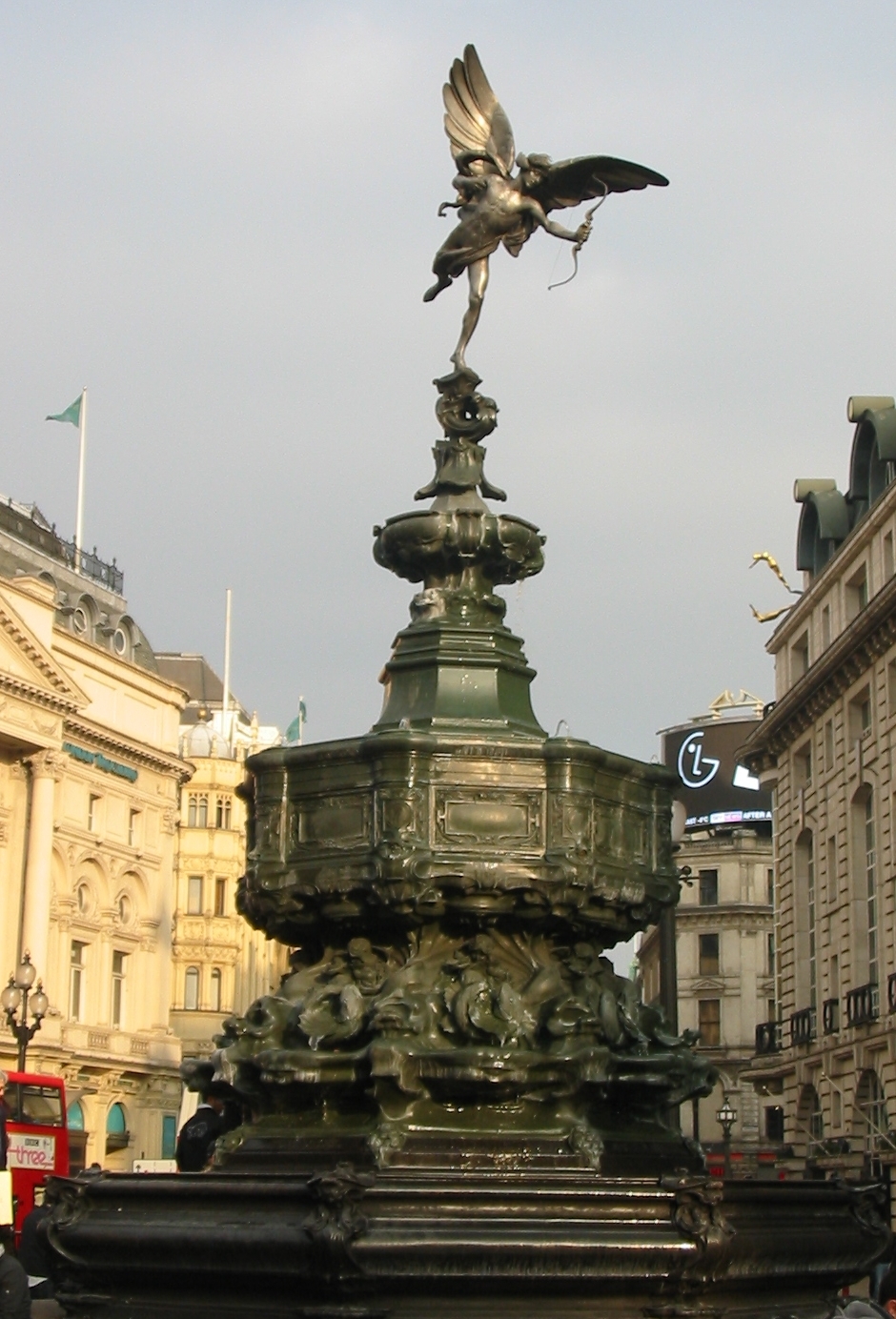
17.  Cross Cultural Sexual Personae: Eros Unbound (blog 50, June 2012)

File:Angel of Christian Charity Eros Piccadilly Circus London 4.jpg
"Eros", Picadilly Circus

18.  "In the Name of God and of Profit"  (blog 11, November 2011)


Statue of Francesco di Marco Datini, Prato, Italy. Photo by Nigel Haworth
  
19.  Here Comes the Can-Can (blog 38, March 2012)
 
20.  The Joys and Tears of Love and Passion (blog 22, January 2012)


Monday, 1 July 2013

61. Italy: From Castle Top to Hedgerow Bottom: My 1958-1960 Gap Years (5)


The most spectacularly located youth hostel I stayed in - the Castle at Lerici, Liguria
[For the four previous blogs about my gap years, see blogs 55, 58, 59 and 60]

By April 1960 I had saved almost a hundred pounds so took off on my long planned trip to Italy. I still have the map of Europe that I carried with me in my backpack and on which I circled the places where I stayed. The photos are now stored on my computer.

I hitch-hiked down through France to Italy and back through Switzerland, Germany, Luxembourg and Belgium. The furthest south I travelled was to Amalfi on the Sorrento peninsula. There were too many highlights to record them all here.

My ability to pick up rides took a big leap forward after Florence where I purchased a traditional student hat, in a style dating from the sixteenth century, and decorated it with badges of the places I visited.
Throughout my trip I stayed in youth hostels, with four exceptions - Cannes, Florence, Siena and on the road from Siena to Arezzo.
I arrived in Cannes late in the evening with a Canadian who gave me a lift in his Porsche and then treated me to my own room in a fancy hotel. There, after an embarrassing misconception of its purpose, I unravelled the mystery of the bidet in my bathroom. [Not as embarrassing as later when staying in a German youth hostel and, misunderstanding the German signage, I wandered into the women's shower and toilet block.]

View from Palazzo Vecchio, Florence, 20th April 1960
In Florence I lodged for around three weeks in a central city pensione run by a lady called Signora Baldacci. There were a few other young people staying there including two American girls around my age. One of these was a blonde who, Italian boys and men being what they are, could not go out without being constantly harassed so I played chaperone to the two of them (and learnt a number of Italian chat up lines in the process!) [In 1988 I was in Italy with Kate and Harriet who were in their late teens and were chatted up by boys who looked about ten or eleven years old!] Later in Como I met up with two New Zealand nurses who were on a cycling tour together and also needed a little help staving off unwanted attention. I caught up with them again on the crossing from Ostend to Dover and when we all arrived into London by train they invited me to a party that evening. Party pooper that I was I went home instead.

Lane in Settignano, near Florence, 20th April 1960.
After Florence I stayed with friends of my Uncle Joe who had a beautiful property in the hills outside Sienna. They had a cook and other servants, and two daughters around my age who carted me around on the back of their Vespas. After all the backpacking it was lovely to enjoy a bit of luxury (and to have all my laundry done). However, on the evening I left there to travel to Perugia, I was stranded out in the countryside on the road to Arezzo unable to get a lift, so I slept under the hedge, which was a bit of a swift return to reality.
 Among the most memorable parts of my trip were the interesting people and experiences thrown up by hitch-hiking everywhere. My Italian was sufficient not just to get me around but to have conversations with a variety of those who gave me lifts. There was much discussion at that time about the French atmospheric tests of atom bombs in the Sahara desert, the first of which had taken place in February 1960, and also about the United States U2 spy plane shot down over Russian territory in May 1960, part of the prelude to Soviet Premier Nikita Khrushchev's famous banging of his shoe on the table at the UN later in the year.

I was often treated very generously by those who gave me lifts, such treats ranging from coffee or tea breaks to a lunch in a Paris restaurant. I was driven into Rome by a communist party member who lived in EUR, a district of the city nearing completion prior to the 1960 Olympics. He invited me to dinner at home with his family. [The EUR development had an interesting history. Designed in 1938 as a world fair - EUR, Esposizione Universale di Roma - to celebrate the twentieth anniversary (in 1942) of the fascists coming to power in Italy, it was to be a new business and residential development on a grand scale. But work stopped in 1942 until the 1950s. It was nearing completion when I visited as were the stadiums and facilities for the 1960 Rome Olympics which I also visited.]
Assisi, 21st May 1960
Street in Assisi, 21st May 1960


San Marino, May 24th 1960
On another occasion Vittorio Vigi, who gave me a lift in his Alfa Romeo Giulietta, took me into the countryside to visit his grandmother; he and I corresponded briefly after I returned home. And during a lift in Switzerland I was joined in a Citreon deux chevaux by a Swiss lady who yodelled in the back of the car all the way along by Lake Lucerne. Less successful was a lift through Liege when we had a collision at a city crossroads. The young driver asked me to disappear since he was driving his father's car and had promised his father he would not pick up hitchhikers.


Among the special treats: tea with lemon; hot calzone straight from the street pizza ovens in Rome after they reopened at 4pm; sitting in St Mark's Square at the base of the campanile spitting cherry pips at the pigeons; the light, such a treat after years of grey British daylight; watching the day's catch of fish and octopus being offloaded at Lerici, still an active fishing village, and a boy fishing in Lake Garda at Riva - I swam in the lake there but it was freezing cold.

Doge's Palace, Campanile and pigeons, St Mark's Square Venice, 30th May 1960


 Riva, Lake Garda, 4th June 1960


Lugano Youth Hostel, 8th June 1960.
I arrived back in the UK in time for my 20th birthday on June 23rd. Later that summer I worked for a spell in the catering department of the London Zoo. I was employed in one of the kiosks dotted around the Zoo serving drinks and snacks, clearing tables and sweeping the water off the forecourt after it had rained. I quickly recognised that the animals in their enclosures were much tidier eaters than the public at large. One particularly showery day I was told to sweep the rainwater away when another shower was clearly imminent, so I told the supervisor how stupid and pointless such an instruction was. He sacked me with 24 hours notice, which I worked out in the restaurant kitchen washing up dishes and kitchen utensils. That was an interesting place to be since Arnold Wesker's 1957 play The Kitchen, set in a restaurant kitchen, had recently helped popularise a theatre of everyday working class life and contributed to the development of the social realism of 'kitchen sink' dramas.

Also that summer I worked for W.S. Atkins and Partners, Consulting Engineers, on a traffic survey helping plan the route of the proposed M11 motorway into London from the north east. This involved being picked up by van from home around 5.30am and deposited with others to set up places for stopping motorists to ask them about their regular commuting routes and times in and out of the city. I soon discovered the correlation between the quality of workers' cars and the times they travelled to work, the dungers going through early and the flash saloons swanning by at 10am or later.

One other benefit of my two gap years was the opportunity to read widely, free of the constraints of any particular syllabus or looming exams. I was a voracious reader in those two years and in my diary made notes on some of the books I had particularly enjoyed. These included philosophical pieces - Jean Paul Sartre's Existentialism and Humanism, Bertrand Russell's The Conquest of Happiness - and books on astronomy, architecture, alchemy, Greek and Sumerian civilisations and other brainy matter. Plus novels and plays.

___________________________________________________________________

Sunday, 7 September 2014

110. Mislaid Dreams, My Gap Year Souvenirs. The Archaeology of a Box (16) 

Checking through the souvenirs I had collected together over the years and boxed up carefully I came across some souvenirs of this 1960 gap year trip to Italy. The first is the map of Europe I took in my backpack. On it I marked each overnight spot where I stayed in a Youth Hostel while hitch-hiking to Florence: Rouen, Fontainebleu, Macon, Valence, (Cannes), Ventimiglia, Lerici, Pisa, Florence. I stayed in Florence for a number of weeks before setting out south to Rome, Naples and the Amalfi Peninsula.

On my way back north I stayed in Viterbo, then to Siena for a few nights with friends of my Uncle Joe. Unfortunately it wasn't the time of the Palio but I collected the brochures anyway in anticipation of returning another year. (I did return to Italy on holiday three times in later years but never did go back to Siena.)


From Siena I hitch-hiked on to Perugia where I visited the Italian University for Foreigners and collected some information about their programmes to add to the ones I had picked up from the University of Florence's Centre of Culture for Foreigners.


Cultural studies was still in its infancy in the UK and the Perugia programmes looked fascinating. I had a vague intention to study there at some later date, but again it never happened.

From Perugia I went to Assisi (staying in Foligno) then to Rimini where all the seaside bars were blaring out Volare, the popular song that summer. Released in 1958 Volare won the Grammy for song of the year. Multiple cover versions were recorded in subsequent years including versions from artists as diverse as Dean Martin, David Bowie and Pavarotti.

From Rimini I took a short detour to San Marino and then on to Ravenna via Vittorio Vigi's grandmother's place.
Postcard of  Byzantine mosaic from Basilica of Sant'Apollinare Nuovo, Ravenna, and letter from Vittorio Vigi
I have no other souvenirs of my trip. I returned to England via stops in Venice, Riva di Garda, Como and Lugano, then through the St. Gotthard Pass and tunnel to Lucerne, Switzerland, and on to Mulhouse and Saarbrucken (in what was then West Germany), Luxembourg, Brussels and London.