Saturday, 24 August 2013

63. Mistress Commodity and the Shop of Satan


August 24th, St Bartholomew's Day

Almost nothing is known about Bartholomew, one of the twelve apostles. However, his nameday is remembered in the context of two events: the 1572 assassination of the leaders of the protestant Huguenots in Paris that led to the massacre by Catholics of tens of thousands of Huguenots across France; and one of the great English Fairs, the St Bartholomew's Day Fair.

The priory of St Bartholomew, West Smithfield, was one of the most important of the City of London's monasteries. Its monastic church and hospital were established in 1123 and its annual fair, first held in 1133, was an important source of revenue for the priory.

The Fair was held annually every August 24th, Saint Bartholomew’s Day, at Smithfield, just outside the London city walls. Most of the great fairs of medieval Europe operated under patronage, either of the sovereign power or municipal authority of the region, or of the church, and many were held on the sites of regular weekly markets. Bartholomew Fair was run under a charter held by the prior of St. Bartholomew and, in spite of the dissolution of the priory in 1538, survived until 1855.


In 1604 the Fair was taken under the control of the City of London and subsequently opened each year by the Lord Mayor. 'By that time,' wrote Richard Cavendish in History Today [55(9) 2005],

'the fair had become far more of a carnival than a business function. Puppet-shows, wrestlers, fire-eaters, dwarfs, dancing bears, performing monkeys and caged tigers vied for attention with contortionists and tight-rope walkers. Astrologers cast horoscopes and miraculous medicines were hawked. Proprietors of food and drink, beer and tobacco, bellowed for custom amid a miasma of roast pork. There were plentiful supplies of toys, gingerbread and mousetraps, puppies, purses and singing birds in a general bedlam of shouts, fiddles, drums and rattles. The fair was one of the year’s great opportunities for pickpockets, naturally, and also for prostitutes, who might be found in tents coyly labelled ‘soiled doves’ or in a nearby street appropriately named Cock Lane.'

It is this fair of the early Stuart period that the dramatist Ben Jonson drew from in his 1614 comedy. 


In the agreement presented by a Scrivener in “The Induction” to Bartholomew Fair, Jonson promises the audience a new play ‘merry, and as full of noise as of sport: made to delight all, and to offend none’. For their part the audience are to agree: to ‘remain in the places their money or friends have put them in, with patience, for the space of two hours and an half, and somewhat more’; to keep their censure of the play proportionate to their entry price - ‘if he only paid sixpence at the door then he is only entitled to six pen’orth of censure’; and to make up their own minds as to the merit of the work, uncontaminated by those around them or by preconceived expectations.

The noise and sport of Bartholomew Fair are provided by a cast of locals and visitors. There are hawkers, hucksters and pedlars, stall-holders and booth-owners - a seller of gingerbread, a seller of toys (hobby-horses, rattles, drums, toy soldiers, dolls), a costermonger selling pears, a tinderbox-man selling mousetraps and flea remedies, and sellers of ale, ballads and roast pig. And there is the cutpurse or pickpocket - ‘Just as Lent is to the Fishmonger’, wrote a pamphleteer in 1641, ‘so is Bartholomew Faire to the Pickpocket.’ Into the fair’s atmosphere of joshing and banter, bargaining and fraud, theft and frivolity, Jonson introduces two characters, each of whom represents a potential source of constraint on the unbridled freedoms of the fair, on unfettered market exchange.
 

The first of these characters, Adam Overdo, is representative of the secular regulation of the fair.  As a Justice of the Peace, Adam Overdo has responsibility for presiding over the Piepowder Court that adjudicates on disputes between dealers and between dealers and customers at the Fair. Distrusting the information he has access to in disputes, the overenthusiastic Overdo takes on a variety of disguises as he seeks out the ‘enormities’ of the Fair - traders’ tricks for short-changing and cheating their customers. These disguises are designed to let him go ‘into every alehouse, and down into every cellar; measure the length of puddings, take the gauge of black pots and cans, aye, and custards, with a stick; and their circumference, with a thread; weigh the loaves of bread on his middle-finger; then would he send for’em, home; give the puddings to the poor, the bread to the hungry, the custards to his children; break the pots and burn the pans, himself; he would not trust his corrupt officers; he would do’t himself.’ In practice the disguises merely produce ridicule and embarrassment for the gullible and luckless Overdo.

Alongside the legal busybody, Jonson presents Overdo’s moral equivalent, the puritan Zeal-of-the Land Busy. Visiting from out of town with a number of fellow puritans, Busy disdainfully presents the fair to his companions as a showplace of corruption and moral degeneracy: ‘the place is Smithfield, or the field of smiths, the grove of hobby-horses and trinkets, the wares are the wares of devils. And the whole fair is the shop of Satan!’ As the play progresses, the hypocrisy of the pompous Busy is revealed and he too becomes the butt of ridicule and derision.

Clearly, misgivings about the values of the unregulated free market, and cynicism regarding the efficacy of secular or spiritual control of that ‘Mistress Commodity’, self-interest, have a long standing history. 

Monday, 5 August 2013

62. 10,000 page views and Jack Blandiver is still kicking his heels, plus top twenty blogs updated to 15th March 2014


Jack Blandiver (see blog 5)
Today (5th August 3013) I hit 10,000 page views for my blog. My largest number of readers have been in the U.S.A. with over 3000 page views, followed by NZ (over 2000) and the UK (over 1000); also page views from seventy-three* other countries:  Argentina, Australia, Azerbaijan, Bangladesh, Belarus, Belgium, Brazil, Bulgaria, Canada, Chile, China, Columbia, Croatia, Czech Republic, Dominican Republic, Ecuador, Estonia, Ethiopia, France, French Polynesia, Germany, Gibraltar, Greece, Hong Kong, Hungary, Iceland, India, Indonesia, Ireland, Israel, Italy, Japan, Jersey, Kuwait, Latvia, Lithuania, Macau, Macedonia, Malaysia, Mexico, Morocco, Nepal, Netherlands, Nicaragua, Norway, Papua and New Guinea, Paraguay, Pakistan, Peru, Philippines, Poland, Portugal, Qatar, Romania, Russia, Saudi Arabia, Singapore, Slovakia, South Africa, South Korea, Spain, Sri Lanka, Sweden, Switzerland, Taiwan, Tanzania, Thailand, Tunisia, Turkey, Ukraine, United Arab Emirates, Venezuela and Vietnam.

[Update, 18th March 2014 - now over 17,000 page views; *as at 19th April 2014]

Here are my top twenty blogs in page view order updated at 18th March 2014.

1.  Rupert Brooke and Taatamata (blog 47, June 2012)

2.  In London, In Love (blog 19, December 2011)
Photo by Trevor Watson, Portfolio Gallery
 3
'Incicly Pedaary'; Boarding School and a Demon of Arabian Mythology (blog 48, June 2012)

User Image
Afrit
4.
 Trips to National Women's Hospital, Piha and Auckland's West Coast (blog 31, February 2012)


5.  "Why Me? The History and Mystery of My Bronchiectasis (blog 21, December 2011)


Painting by Jacqueline Morreau
6.  Between Mark Twain and Zadie Smith; My Gap Years [2] (blog 58, May 2013)


7.  Beneath a Cathedral of Commerce: Harrods of Knightsbridge and My Gap Years 1958-1960 (blog 60, May 2013)


8.  Love, Death and Letters from My Mother's Hut (blog 30, February 2012).


9.  Of Primary School, Pets and Pauper Lunatics (blog 33, February 2012)


10.  Wall's Ice Cream: My 1958-1960 Gap Years 3 (blog 59, May 2013)


11.  One Wedding, Two Funerals, Three Letters, Thirty Years (blog 37, March 2012)


Victoria Park, Hackney, Winter 1981

12.  Sophie's Fan (blog 14, December 2011)

 
 13.  Holly Pandora's Big Day Out (blog 29, January 2012)


14.  Composition with The Devil's Tools  (blog 10, November 2011)


15.  Christmas Greetings and Reflections (blog 18, December 2011)
Orewa Beach
16.  "And there the antic sits.." (blog 36, February 2012)

William Blake Etching
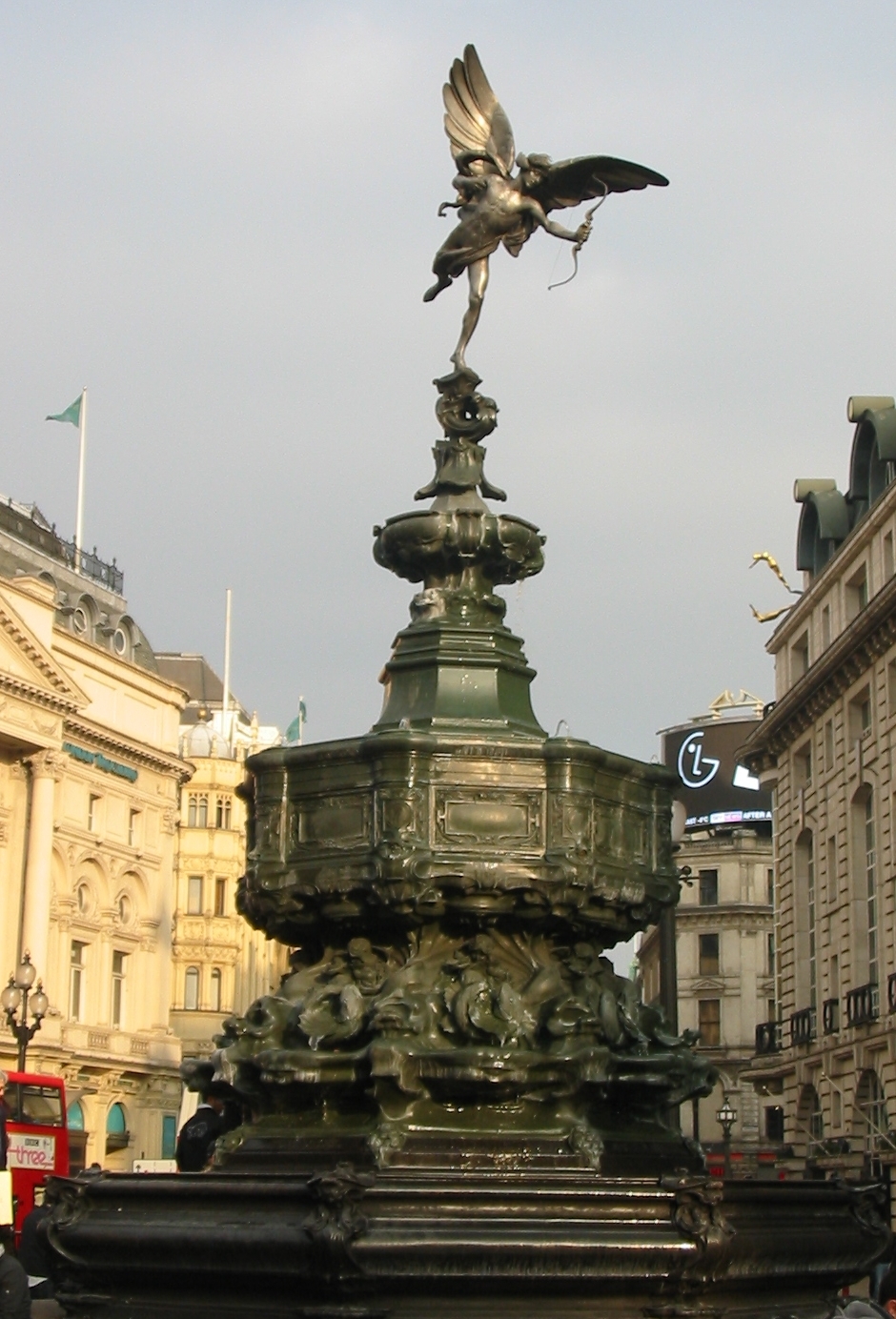
17.  Cross Cultural Sexual Personae: Eros Unbound (blog 50, June 2012)

File:Angel of Christian Charity Eros Piccadilly Circus London 4.jpg
"Eros", Picadilly Circus

18.  "In the Name of God and of Profit"  (blog 11, November 2011)


Statue of Francesco di Marco Datini, Prato, Italy. Photo by Nigel Haworth
  
19.  Here Comes the Can-Can (blog 38, March 2012)
 
20.  The Joys and Tears of Love and Passion (blog 22, January 2012)


Monday, 1 July 2013

61. Italy: From Castle Top to Hedgerow Bottom: My 1958-1960 Gap Years (5)


The most spectacularly located youth hostel I stayed in - the Castle at Lerici, Liguria
[For the four previous blogs about my gap years, see blogs 55, 58, 59 and 60]

By April 1960 I had saved almost a hundred pounds so took off on my long planned trip to Italy. I still have the map of Europe that I carried with me in my backpack and on which I circled the places where I stayed. The photos are now stored on my computer.

I hitch-hiked down through France to Italy and back through Switzerland, Germany, Luxembourg and Belgium. The furthest south I travelled was to Amalfi on the Sorrento peninsula. There were too many highlights to record them all here.

My ability to pick up rides took a big leap forward after Florence where I purchased a traditional student hat, in a style dating from the sixteenth century, and decorated it with badges of the places I visited.
Throughout my trip I stayed in youth hostels, with four exceptions - Cannes, Florence, Siena and on the road from Siena to Arezzo.
I arrived in Cannes late in the evening with a Canadian who gave me a lift in his Porsche and then treated me to my own room in a fancy hotel. There, after an embarrassing misconception of its purpose, I unravelled the mystery of the bidet in my bathroom. [Not as embarrassing as later when staying in a German youth hostel and, misunderstanding the German signage, I wandered into the women's shower and toilet block.]

View from Palazzo Vecchio, Florence, 20th April 1960
In Florence I lodged for around three weeks in a central city pensione run by a lady called Signora Baldacci. There were a few other young people staying there including two American girls around my age. One of these was a blonde who, Italian boys and men being what they are, could not go out without being constantly harassed so I played chaperone to the two of them (and learnt a number of Italian chat up lines in the process!) [In 1988 I was in Italy with Kate and Harriet who were in their late teens and were chatted up by boys who looked about ten or eleven years old!] Later in Como I met up with two New Zealand nurses who were on a cycling tour together and also needed a little help staving off unwanted attention. I caught up with them again on the crossing from Ostend to Dover and when we all arrived into London by train they invited me to a party that evening. Party pooper that I was I went home instead.

Lane in Settignano, near Florence, 20th April 1960.
After Florence I stayed with friends of my Uncle Joe who had a beautiful property in the hills outside Sienna. They had a cook and other servants, and two daughters around my age who carted me around on the back of their Vespas. After all the backpacking it was lovely to enjoy a bit of luxury (and to have all my laundry done). However, on the evening I left there to travel to Perugia, I was stranded out in the countryside on the road to Arezzo unable to get a lift, so I slept under the hedge, which was a bit of a swift return to reality.
 Among the most memorable parts of my trip were the interesting people and experiences thrown up by hitch-hiking everywhere. My Italian was sufficient not just to get me around but to have conversations with a variety of those who gave me lifts. There was much discussion at that time about the French atmospheric tests of atom bombs in the Sahara desert, the first of which had taken place in February 1960, and also about the United States U2 spy plane shot down over Russian territory in May 1960, part of the prelude to Soviet Premier Nikita Khrushchev's famous banging of his shoe on the table at the UN later in the year.

I was often treated very generously by those who gave me lifts, such treats ranging from coffee or tea breaks to a lunch in a Paris restaurant. I was driven into Rome by a communist party member who lived in EUR, a district of the city nearing completion prior to the 1960 Olympics. He invited me to dinner at home with his family. [The EUR development had an interesting history. Designed in 1938 as a world fair - EUR, Esposizione Universale di Roma - to celebrate the twentieth anniversary (in 1942) of the fascists coming to power in Italy, it was to be a new business and residential development on a grand scale. But work stopped in 1942 until the 1950s. It was nearing completion when I visited as were the stadiums and facilities for the 1960 Rome Olympics which I also visited.]
Assisi, 21st May 1960
Street in Assisi, 21st May 1960


San Marino, May 24th 1960
On another occasion Vittorio Vigi, who gave me a lift in his Alfa Romeo Giulietta, took me into the countryside to visit his grandmother; he and I corresponded briefly after I returned home. And during a lift in Switzerland I was joined in a Citreon deux chevaux by a Swiss lady who yodelled in the back of the car all the way along by Lake Lucerne. Less successful was a lift through Liege when we had a collision at a city crossroads. The young driver asked me to disappear since he was driving his father's car and had promised his father he would not pick up hitchhikers.


Among the special treats: tea with lemon; hot calzone straight from the street pizza ovens in Rome after they reopened at 4pm; sitting in St Mark's Square at the base of the campanile spitting cherry pips at the pigeons; the light, such a treat after years of grey British daylight; watching the day's catch of fish and octopus being offloaded at Lerici, still an active fishing village, and a boy fishing in Lake Garda at Riva - I swam in the lake there but it was freezing cold.

Doge's Palace, Campanile and pigeons, St Mark's Square Venice, 30th May 1960


 Riva, Lake Garda, 4th June 1960


Lugano Youth Hostel, 8th June 1960.
I arrived back in the UK in time for my 20th birthday on June 23rd. Later that summer I worked for a spell in the catering department of the London Zoo. I was employed in one of the kiosks dotted around the Zoo serving drinks and snacks, clearing tables and sweeping the water off the forecourt after it had rained. I quickly recognised that the animals in their enclosures were much tidier eaters than the public at large. One particularly showery day I was told to sweep the rainwater away when another shower was clearly imminent, so I told the supervisor how stupid and pointless such an instruction was. He sacked me with 24 hours notice, which I worked out in the restaurant kitchen washing up dishes and kitchen utensils. That was an interesting place to be since Arnold Wesker's 1957 play The Kitchen, set in a restaurant kitchen, had recently helped popularise a theatre of everyday working class life and contributed to the development of the social realism of 'kitchen sink' dramas.

Also that summer I worked for W.S. Atkins and Partners, Consulting Engineers, on a traffic survey helping plan the route of the proposed M11 motorway into London from the north east. This involved being picked up by van from home around 5.30am and deposited with others to set up places for stopping motorists to ask them about their regular commuting routes and times in and out of the city. I soon discovered the correlation between the quality of workers' cars and the times they travelled to work, the dungers going through early and the flash saloons swanning by at 10am or later.

One other benefit of my two gap years was the opportunity to read widely, free of the constraints of any particular syllabus or looming exams. I was a voracious reader in those two years and in my diary made notes on some of the books I had particularly enjoyed. These included philosophical pieces - Jean Paul Sartre's Existentialism and Humanism, Bertrand Russell's The Conquest of Happiness - and books on astronomy, architecture, alchemy, Greek and Sumerian civilisations and other brainy matter. Plus novels and plays.

___________________________________________________________________

Sunday, 7 September 2014

110. Mislaid Dreams, My Gap Year Souvenirs. The Archaeology of a Box (16) 

Checking through the souvenirs I had collected together over the years and boxed up carefully I came across some souvenirs of this 1960 gap year trip to Italy. The first is the map of Europe I took in my backpack. On it I marked each overnight spot where I stayed in a Youth Hostel while hitch-hiking to Florence: Rouen, Fontainebleu, Macon, Valence, (Cannes), Ventimiglia, Lerici, Pisa, Florence. I stayed in Florence for a number of weeks before setting out south to Rome, Naples and the Amalfi Peninsula.

On my way back north I stayed in Viterbo, then to Siena for a few nights with friends of my Uncle Joe. Unfortunately it wasn't the time of the Palio but I collected the brochures anyway in anticipation of returning another year. (I did return to Italy on holiday three times in later years but never did go back to Siena.)


From Siena I hitch-hiked on to Perugia where I visited the Italian University for Foreigners and collected some information about their programmes to add to the ones I had picked up from the University of Florence's Centre of Culture for Foreigners.


Cultural studies was still in its infancy in the UK and the Perugia programmes looked fascinating. I had a vague intention to study there at some later date, but again it never happened.

From Perugia I went to Assisi (staying in Foligno) then to Rimini where all the seaside bars were blaring out Volare, the popular song that summer. Released in 1958 Volare won the Grammy for song of the year. Multiple cover versions were recorded in subsequent years including versions from artists as diverse as Dean Martin, David Bowie and Pavarotti.

From Rimini I took a short detour to San Marino and then on to Ravenna via Vittorio Vigi's grandmother's place.
Postcard of  Byzantine mosaic from Basilica of Sant'Apollinare Nuovo, Ravenna, and letter from Vittorio Vigi
I have no other souvenirs of my trip. I returned to England via stops in Venice, Riva di Garda, Como and Lugano, then through the St. Gotthard Pass and tunnel to Lucerne, Switzerland, and on to Mulhouse and Saarbrucken (in what was then West Germany), Luxembourg, Brussels and London.

Friday, 31 May 2013

60. Beneath a Cathedral of Commerce: Harrods of Knightsbridge and My 1958-1960 Gap Years (4)


This is the fourth blog about my gap years - see blogs 55, 58 and 59.

My main job over the 1959-60 winter was working for Harrods in Knightsbridge. You could not ask for a much better view of the British class system and inequitable distribution of wealth than working in a retail shop in Knightsbridge, Piccadilly or Bond Street.

The original owner, Charles Henry Harrods had a grocery shop and tea merchants business in Stepney, East London and moved his business to its present site in 1849. The current store was built between 1901 and 1905. It was the first great department store in London, Selfridges opening in Oxford Street in 1909. But the earliest such store was the Bon Marche, which opened in Paris in 1869 and incorporated an art gallery. Such a store was described by Emile Zola in his 1883 novel Au Bonheur des Dames as a 'cathedral of modern commerce' and by a French architect in 1902 as a museum of merchandise. Now Harrods is as much a tourist attraction as a shop, with crowds flocking to see the magnificent food halls or the decorations and toy department at Christmas.

Part of the Harrods Food Halls

Around the time I worked at Harrods it was bought by the House of Fraser, a High Street Department Store group, then sold in 1985, after considerable controversy, to Mohammad Al Fayed. In 2000 Al Fayed, in the wake of falling out with the British Royal Family after the deaths of Princess Diana and his son Dodi, removed the royal coats of arms from the building's exterior - those of the Queen, Prince Philip, Prince Charles and the Queen Mother - and subsequently burnt them. In 2010 Harrods was sold by Al Fayed to its current owners the Qatari Royal Family.

Workman haul off a Royal coat of arms from the Knightsbridge store
The Queen's Coat of Arms being removed from Harrods
I was taken on at Harrods as a warehouseman in the perfumery department; my pay was eight guineas a week. Beneath the glamorous Harrods shop, and extending under the Brompton Road to the other side, was a labyrinthine warren of passages, storerooms and offices that kept the flow of inward products moving from the delivery trucks to unpacking, pricing, storage and loading onto trolleys to take up to the shop to stock each department. I was mainly involved in unpacking and putting price labels on each item and, along with a mate, pushing stock trolleys along passages to the staff lift that would bring you up into the store in the relevant department.

Occasionally word went round that some famous royal was in the department. We would try and sneak up for a look, or chat to the shop girls to find out what the celebrities had bought and be disappointed to hear that Prince Rainier and Princess Grace only purchased three bottles of Ribena. Once I peeked a look at the Marchioness of Salisbury, a legend in the store for her regular weekly expenditure of £150 in the perfumery department alone. Rumour was she never let water touch her skin and only bathed in eau de cologne. She looked like a wizened old prune.

Other abiding memories of Harrods’ perfumery department?
  • First, the astonishing mark up from the cost prices to the sale prices of perfumes and cosmetics, as much as 90% in many cases. 
  • Second, the beautiful sales assistants in the shop.
  • Third, the generous tips from customers if you were asked to carry their bags out to a waiting taxi or chauffeured limousine – as much as half a crown, which seemed like a fortune to me in those days.
  • Fourth, the West Indians’ exuberant playing of dominoes in the staff cafeteria during lunch breaks. Each domino was slapped onto the table with a loud clatter and greeted with boisterous shouts from the playing partners. Later, when seeing West Indian spectators at a cricket test greet each ball with similar excitement, I realised what the stakes were. Each domino/ball carried somebody’s bet.

I worked in Harrods perfumery department through until Christmas and then transferred to menswear for the Christmas and New Year Sales and on into the early months of 1960. Later, as a university student, Harrods continued to be a good source of Christmas holiday employment for me. My favourite year was the one where I worked in the fruit and vegetable department. As a staff member we could purchase produce at cost plus 5% so our family Christmas fare that year was of the very best quality and included some exotic fruits, like lychees, that were a completely new experience for us, plus all sorts of delicious things like strawberries which were out of season.